Pain Clinic #7: Trying Alternative Pain Treatments

I had my third appointment at the pain clinic since having surgery in August. Each appointment I have makes me aware of how fortunate I am to have access to such an incredible resource. My pain may not be gone, but I have specialists working to support me and trying to find the root cause – and hopefully the cure – of my pain. My primary doctor at the pain clinic is a wonderfully compassionate woman who is open to exploring as many alternative treatments as possible to treat my pain.

During this appointment, we reviewed my pain medications. I’m still taking a considerably higher dose of the opioid pain medications than I was before surgery, but I’ve been trying to decrease the doses over the past few months. I’m keeping a daily log detailing how much I take throughout each day. My pain specialist encouraged me to continue keeping this log because it’s helping to identify trends in my pain. I can pinpoint when I have a pain flare up and what activities may cause it, and whether I need to increase the doses of my pain medications. To support these trends she wrote me prescriptions for each of my pain medications with quantities large enough for me to increase or decrease my doses as my pain dictates.

Acupuncture was the next thing we discussed. My pain specialist is a trained acupuncturist. By all accounts, she’s highly skilled. Knowing that as a medical doctor – she’s an anesthesiologist – she has a holistic approach to treating pain makes me feel encouraged. One of my next appointments with her will be in the treatment centre of the pain clinic – where I had my nerve block  – for acupuncture. Her hope is that acupuncture treatments will help to reduce my pain and my need for such high doses of pain medications. My hope is that the treatments will deliver those results, and much more.

We also talked about the Mindfulness-Based Chronic Pain Management (MBCPMTM) program offered at the same hospital as the pain clinic. The program teaches patients “how to manage their chronic pain and illness through Mindfulness and meditation practice, and better lifestyle skills.” It’s based on the Mindfulness-Based Stress Reduction Program (MBSR) originated by Jon Kabat-Zinn. My pain specialist is referring me to the program to give me another option for managing my pain. The idea for me to try this program originated with my therapist because our therapy sessions include mindfulness practices. My pain specialist believes this program will be a beneficial addition to the practices I’m already including in my life to cope with my pain. I believe, whatever the outcomes, I have an incredible support system that keeps working to find solutions to get me pain-free.


Third Eye Blind – Semi-Charmed Life
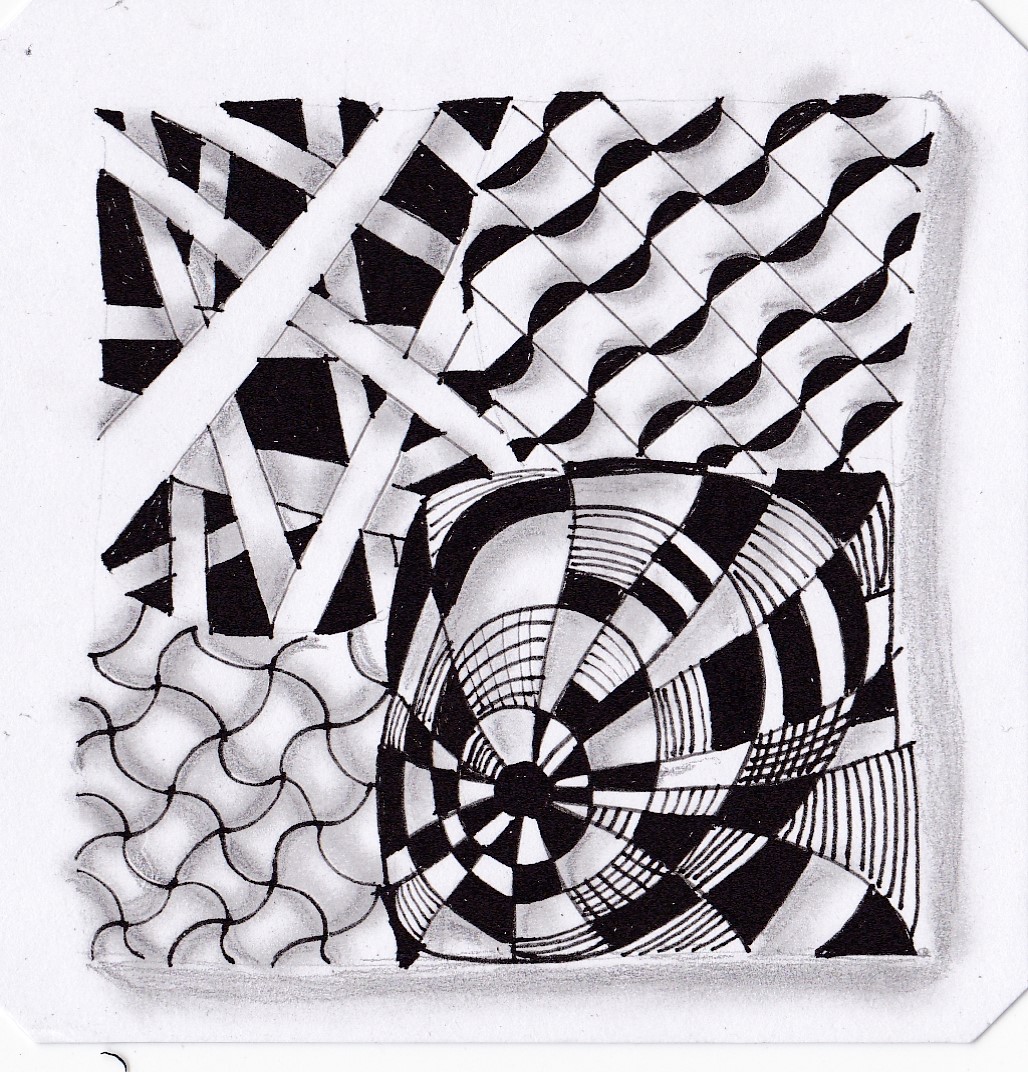
 

Zentangle Tile #2: What To Do When The Power Goes Out

The power was out in my home yesterday for a few hours. I’m assuming there was some sort of issue at a nearby power station that knocked it out. Me being me, I didn’t notice that the power was out until I tried to go online to search for something. My laptop’s inability to connect to the interwebs led me to investigate my internet connection. All the lights on my router were off. I checked to see whether the power cord was still connected, it was, but the light on the power bar I plug it into was off. It took flipping the power bar switch on and off a few times before I realized there was no power at all.

No power meant I had to limit the use of my cell phone, so I sent a couple of text messages to let some family and friends know my situation, and then turned off my phone. It also meant I had to delay my plan to take a shower – my bathroom gets quite dark and I don’t need to increase my risk of falling in the shower again. Luckily, I had boiled the kettle a few minutes before the power went off. I made myself a large cup of tea and tried to figure out what I was going to do without power. I decided to work on some more Zentangle patterns and a new tile. I learned two new patterns – sea weed border and wire wrap, which are in the Zentangle 2, Expanded Workbook Edition from the series of books written by Suzanne McNeill. I’ve been working my way through this second book in the series at a snail’s pace. Nonetheless, I now have sixty-six patterns completed in my Zentangle sketchbook.

After practicing the two new tangle patterns, I went to work on my second tile. For this tile, I drew lines to guide my placement of patterns by tracing the lid of a small tea tin and drawing some random lines around it, and I used four tangle patterns. Three of the tangles I’ve learned from Suzanne McNeill’s books and the fourth one I taught myself from the Tangle Patterns site a while ago because I wanted to include it in one of my art/gratitude journal drawings. Here’s the second tile I’ve completed in two days.

Tile 2 Shaded

Tile #2 Shaded – String: Tea Tin Lid & Random Lines – Tangles: Hollibaugh, Huggins, Twilight Zone, Wiggle Waves

I guess power outages are good for something. In my case, I was able to use the lack of electronic distractions to focus on doing something meditative. I had a quiet, calm day. Concentrating on drawing lines on a white 3.5in x 3.5in card, helped put my initial concern about the food, especially the ice cream, in my refrigerator going bad to rest; and made what could have been a stressful day very enjoyable.


U2 – Electrical Storm

Virtual Therapy Sessions

I’ve been very fortunate, as I’ve been dealing with my illness to have the support of a good mental health team. On days when the pain has made it difficult for me to get out and make it to my appointments with my therapist we’ve had my sessions by phone. In the meantime, he was working to get approval for us to have my sessions on a secure video conference service. We had a test run last week but we ran into some technical issues so things didn’t go very smoothly. I was disconnected a few times and when I did connect, his voice kept being garbled. Because of the technical difficulties, we had to resort to the phone for what ended up being a very short session.

My therapist got technical support at the clinic involved to work out the kinks. I had a call around lunchtime today with the program support contact. She walked me through some troubleshooting steps and we figured out the issues. The video conference service requires a double log-in or two-factor authentication for the log in to be secure. I wasn’t aware of that, so when I kept seeing the same pop-up window open on the screen, I thought it was an error. When I closed the second window it forced the program to start over, which appeared as if I was being repeatedly kicked out. The second issue with the garbled voice was easily solved. She said that because I use a laptop my speakers don’t carry the sound of the video conference application well. She asked me to try using my phone earbuds or headphones if I had them. My earbuds worked perfectly.

With all the technical issues solved, I logged in to my therapy session later in the afternoon. I was able to see and hear my therapist clearly. We had an hour-long session without any technical glitches at all. The most important piece of the session is that my therapist was able to see me, which meant he was able to gauge my reactions to the issues we discussed. That’s important in my sessions because my therapy is based in mindfulness practices. The live video stream gave my therapist the opportunity to see me so he could help me process what I was feeling in my body more slowly as we worked through the session. The quality of this virtual video session was much better than just a phone call. We scheduled my next therapy session for a few weeks from now. It’s scheduled as if I’m going to go into his office, but if my pain is too great, we will use the video conference service instead.

I’m so appreciative of the efforts my therapist has made to accommodate me during my illness. Having mental health support has kept me afloat at times when I didn’t know if I could cope with my pain and the mystery of its origins. I continue to have the support now and my therapist is helping to find additional resources to help me cope with the disappointment that my pain is still present after surgery and possible alternative therapies to help me heal (e.g. iRest, chronic pain groups). I can’t imagine what I would do without this support and these resources, and I can’t imagine how anyone who doesn’t have access to mental health services is getting through a life with chronic pain or a chronic illness.


Jamiroquai – Virtual Insanity