Having a Period While Living With Chronic Pain

I’ve been contemplating writing about this issue for a while, and finally decided to just do it because I have yet to see anything written or discussed about it anywhere. It’s an issue I assume that countless women who fall within the reproductive age demographic and live with chronic pain and/or other chronic illnesses struggle through regularly.

I’ve always had difficult menstrual cycles, or what is more commonly called monthly periods. Since the first one arrived when I was in my early teens, it’s been a painful monthly – or near monthly – reminder of my femininity and reproductive health. Each period I’ve had has been accompanied by excruciating pelvic/uterine cramps, back pain, nausea, heavy bleeding, fatigue – and more often than I’d care to remember – debilitating migraines. Over the years, I’ve even had multiple investigative surgeries to look for potential causes and to rule out the possibility that I might have endometriosis, which I don’t have. Alas, each surgery has resulted in no explanations for why I’ve lived with this degree of period pain (dysmenorrhea) since entering womanhood.

As I’ve grown older, I’ve adopted a glass half full approach to the way I look at this situation: I take comfort in the knowledge that each of these monthly episodes means I’m one month closer to menopause. The phase of my life when I‘ll no longer have to live with the anxious anticipation of the arrival of my period or suffer through its painful symptoms. Nonetheless, from my current vantage point, menopause seems to be farther away than I’d like it to be.

More unfortunate, is that since I’ve been living with daily, nonstop chronic pelvic pain and leg pain, I’ve also been battling with the added monthly pain caused by my periods. The worst thing about this is that I feel each of these intense pains separately. That makes it even harder to cope or do basic daily activities during the time that I have my period.

For the duration of each of my periods (usually 7 days, sometimes longer), it feels like an extra layer of piercing pain is thrown on top of my unrelenting chronic pain and it makes my pelvis – and every organ in it – feel as if it’s being squeezed in a vise . Strangely, I feel the pain from my periods strongest within the same area where I had surgery to remove the growth that triggered the illness I now live with. However, since that growth is no longer sitting in my pelvis, the increased pain during my period makes no sense, at least not to me. Worse still, is that the copious amount of opioid pain medications I take daily to manage my chronic pain do nothing to relieve my period pain(s).

As I struggle with this agony each menstrual cycle, as I am now, I wonder how other women living with chronic illnesses and/or chronic pain cope if they also have painful periods. How do they go about living their lives when they have to endure extreme menstrual symptoms – including crippling pelvic cramps – combined with other incessant symptoms and pain(s) from a chronic illness that may affect multiple areas of their bodies? How do they cope with the bombardment of pain in multiple areas of their bodies for days on end, when pain in just one part of the body can make one feel as if they might lose their mind? Moreover, since women have lived with painful periods for as long as we’ve had periods, why aren’t there more definitive solutions – medical or otherwise – for treating menstrual symptoms and pain?

This may sound like a rant to some people but these are legitimate questions when one lives with these types of pain. Why do women have to suffer like this continually and why should we have to endure painful periods on top of a chronic illness or already debilitating chronic pain? When will modern medicine develop something that stops us from suffering this way each month of our lives when we mature to reproductive age?

I’m hoping this post sparks some discussion and encourages women to share what helps them cope with painful periods. Aside from curling up in the fetal position and begging the universe to make the pain go away, I wouldn’t mind hearing some useful ideas to help get me through these periods with less extra pain…


Monica – Don’t Take It Personal (Just One Of Dem Days)


Note: There’s some interesting sharing about this post happening on my Instagram page .

I Have To Come Clean

Yesterday, I asked my friend U for a rain check on plans we made to go see a movie. It was the second time in the space of a month; but I had to. This time it was because my feet were swollen to the point of not being able to wear shoes – not even flip-flops – again. The previous opt-out was a few weeks earlier after I committed, with the best intentions, to attend one of her art exhibits. I had an appointment earlier that same day and experience has taught me that my body can’t handle more than one event or activity for a few hours in a day; any more than that will be followed by days, if not weeks, of increased pain.

Sadly, in the nearly five years since my illness started, I’ve lost count of how many times I’ve asked U to reschedule or canceled our plans altogether. Similarly, I’ve lost count of how many times I’ve rescheduled or canceled plans with other friends and family members; some of whom no longer bother making the effort to do things with me. Mind you, the arrival of my illness alone was enough to cause some people to disappear from my life early on. As I got ready to take a shower late last night, it dawned on me as I sat naked in my bathroom, that at the rate I’m going, I won’t have many friends left to reschedule or cancel plans with if I don’t come clean about the state of my life. So here I am, writing what amounts to an open letter to all my friends and my family members about what my version of living with a chronic illness looks like.

I know I talk about feeling pain, but maybe I still haven’t explained it clearly: This illness causes me to feel high levels of pain every minute of every day in almost every part of my body below my belly button. To cope with this pain I take large quantities of high-dose opioid-based pain medications (narcotics) six times each day. Even in these large doses, these opioid-based medications don’t come close to stopping the pain. However, without them, moving around or walking upright would be near impossible feats for me to accomplish. Unfortunately, because of these pain medications, I also have added medical complications from expected side effects and other symptoms – like the swelling in my legs and feet – that continue to defy explanation.

The truth is: nothing I’ve been prescribed controls my pain. In fact, my doctors can’t explain why – after multiple surgeries and many treatments that failed – I still have such high levels of pain nearly five years after this all started. Lucky for me, these doctors are all still invested in trying to figure it out. Although, that’s little comfort to me at times; especially when the pain flares up beyond a level where anyone should be expected to cope.

As a result, all I can do is manage my life in a way that minimizes pain flare-ups and the worsening of any of the side effects. That’s what I’ve been trying to do – and learn how to do better – with the different programs and treatments I’ve been participating in these last couple of years. The problem, I’m only now realizing, is that I haven’t been communicating with all of you what I need to do to manage things and take better care of myself or how much help I need to do it. The latter part of that statement is probably the most important: I haven’t told you that I need help taking care of myself.

Since my focus has been on trying not to be a bother or not making you worry about me, I haven’t been telling you the truth. Most days – even when I sound upbeat during phone calls or I add smiley-face emojis to text messages – I’M IN AGONY. Because of the pain I may not have slept more than a few hours in the previous 24 hours; I may not have taken a shower that day or the day before. I may not have cooked a proper meal in days, I may have a pile of dirty dishes in my kitchen sink or piles of clothes on my bed that I need to put away, and I may have put off doing my laundry again so the baskets continue to fill.

With all of this, and probably more, going undone because I’m in pain, when I ask for a rain check or cancel plans, it’s for the same reason: The pain or other symptoms are at levels I can’t cope with. Or I’m trying to manage them so they don’t reach levels where I won’t be able to move for days, or worse case land me in the hospital Emergency Room where all they can do for me is add extra doses to the pain medications I’m already taking.

Rescheduling or canceling is never because I don’t share the same desire to spend time with each of you. It’s never because I don’t respect your time or value the effort you go to when you plan something for us to do together. The relationships I have with each of you is unique, but that doesn’t mean I don’t owe each of you the same degree of respect and honesty. I don’t know if I’ve shared too much or not enough, but I do know that this is the truth about what I’m living with and I hope each of you will continue to stick around, so we can make more plans I might need rain checks for…


The Toll of Opioid Pain Medications

Reading this article a few days ago, gave me pause: Opioid death toll in Canada nearly 4,000 last year, new data show.

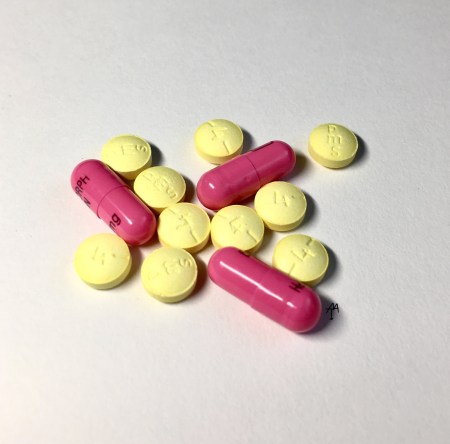
I’ve been taking opioid-based (narcotic) pain medications since the first day of the hospitalization for my illness, almost five years ago. After my admission to the hospital emergency room, the first thing the ER doctor recommended to give me for my pain was Oxycodone. My pain was so intense that I could barely talk, but I refused it because I knew taking it would cause me to become incoherent and prevent me from clearly explaining what I was experiencing. The doctor tried to convince me to take it by telling me that I needed it to control the pain so she could examine me.

I knew I couldn’t tolerate even the gentlest touch without some kind of medication to dull the pain. However, I also knew the risks associated with this particular pain medication, which at that time, was already identified as a major culprit at the heart of the opioid epidemic. So taking it, even one time, was not something I wanted to do. The doctor deferred to my concerns and instead gave me a non-opioid medication by injection that kept my mind clear so I could have a lucid conversation about my medical history and current symptoms with her. It also gave me a chance to ask questions about my initial diagnosis and what actions she intended to take to confirm it.

After all the test results came back with a preliminary (and very wrongly assessed) diagnosis, the doctor again recommended that I take the Oxycodone. By that time, I was so exhausted and still feeling such incredible pain that I relented and agreed to take it. I asked her to prescribe the lowest possible dose that would still deliver some pain relief and she ordered it. Unfortunately, even though I was taking it at that low dose, it fogged my mind. It took a great effort to concentrate enough to talk, sit up in bed, or move in general. Everything felt like it was happening around me, in slow motion, and I felt a near total loss of control.

In the following days – in a semi-private room on the surgical ward of the hospital – the doctors continued to prescribe the same low dose of Oxycodone for me. After the third day, I had to demand that they stop giving it to me because of how unable I was to make sense of things unless everyone spoke very slowly and, more importantly, I started hallucinating. The hallucinations were so frightening that during one of them – despite the terrible pain – I got out of bed to search for someone who turned out to be a figment of my drug-distorted imagination. Thankfully, the doctor on-call listened to me and prescribed another opioid-based pain medication I was better able to tolerate; and Oxycodone is now listed on my medical records as a medication that I can NEVER take.

I know that it’s been reported that many of these opioid-related deaths are because of “recreational use” of certain opioids or after a patient has developed an addiction. Still, with the high doses of prescribed pain medications I take now, I’m at risk of developing an addiction or, heaven forbid, accidentally overdosing. Because of these risks, I’m very careful about taking my pain medications exactly as prescribed. I also make sure I pay close attention to any changes in the way my body reacts to these pain medications or whether any of the known, critical side effects suddenly appear: severe dizziness and/or fainting, trouble breathing, unusual drowsiness and/or difficulty waking up, and/or seizures.

Beyond these very real and frightening concerns, I must also think about the longer-term physiological effects of taking opioid-based pain medications. I’ve been taking them in one form or another since this all started, therefore, my liver and kidneys work, and have worked, overtime for nearly five years to process these drugs throughout my body. Because of this, my liver and kidneys get tested regularly to make sure they continue to work within normal levels and won’t add more complications to my already poor health.

There’s also the possibility that the longer I take these opioid-based pain medications that they could, one day, stop working without any warning. Worse still, I could develop a condition where instead of the medications managing my pain they cause me to feel more pain. This is because “taking opioids over a long period of time may in fact increase a patient’s sensitivity to pain (hyperalgesia). This happens because long-term use of opiate painkillers causes a decrease in your ability to tolerate pain and an increase in sensitivity to pain. In fact, people taking opioids long term may keep having pain, or may see their pain increase, long after the original cause of pain has healed.”

These are some of the thoughts and fears I live with every day. With every dose of the opioid-based pain medications, I take to cope with my pain. However, I recognize that although this is my reality, I feel blessed to be alive to have these thoughts and fears.

My heart breaks for anyone who has lost their life to this health crisis and those who have been left to mourn them.