Sow Together’s Shocking Suicide Statement

Last night I came across a blog posting that I suppose the author meant to be helpful to people feeling suicidal, and the families and friends who support them. Shockingly, the writer started with this statement

“Suicide is the ultimate act in selfishness.”

How the !@#$ is that supportive? Farther down in the post she writes, “My intent is not to rip on people who have these thoughts but to explain their thought process and how loved one’s can help.” Ripping on people who have these thoughts is exactly what she did with the opening statement, and it shows that she doesn’t understand the thought process of anyone who might feel suicidal. The post contained quotes from WebMD about mental illness and some basic psychological self-assessment tools about suicide. This information barely touches the surface of what someone who attempts suicide might feel or think.

I can’t remember the last time something I read made me this angry and feel the need to respond. I kept thinking about the opening statement as I continued to read the post. How can someone make such a harsh, judgemental statement and expect anyone who feels or has ever felt suicidal to keep reading. How could the writer expect someone who feels buried by the weight of depression and hopelessness, to see that shocking statement and feel comfortable reading further? To read on to learn what the writer considers helpful ideas about how to communicate with friends and family, when it feels like nothing but death can end the pain. How can the writer expect, someone like myself, who attempted suicide multiple times because I’m a survivor of horrendous, unspeakable things, to connect with anything she shares after that opening line.

The sad thing is that this isn’t the first time I’ve heard or read a statement like this. I’ve had the misfortune of sitting at a dinner table with people who openly stated that anyone who attempted or was successful at committing suicide is a weak coward. I felt myself shrink as the conversation continued around me. These people weren’t aware that I had attempted suicide. After hearing their callous, unfeeling, self-righteous statements about someone else’s suffering, I would never tell them about the pain I experienced that led me to believe that death was the only thing that could end my pain.

The people who make these statements don’t understand how hard it is to find resources; whether it is good doctors or therapists, or the right combination of medications to help someone who feels this kind of pain to cope. They don’t understand how deeply, someone living with depression, can feel shame because he or she believes they should be mentally stronger and tougher, and “snap out of it” because that’s the message sent by the society we live in. The people who make these statements don’t understand how hard it is to live day in and day out feeling detached from the world. Feeling like nothing you do can close the divide of the separation you feel from everyone in your life.

People who make these statements don’t understand hopelessness. They don’t understand someone feeling that he or she has tried everything in their power to get well, even when what they suffer from – bipolar disorder, schizophrenia, PTSD, depression, anxiety, or other mental health and chronic physical illnesses – has no cure and might only be manageable, at best. They don’t understand someone who has tried to “get over” whatever it is that hurt them. The thing that continues to split a person open over and over again because it has become part of their DNA. The people who make these statements don’t understand what it’s like to live feeling physical and/or psychological pain, shame, and self-blame for something you couldn’t stop from happening to you and now can’t control. They don’t understand how exhausting it is to live in a continuous state of hypervigilance because a disease or someone took away your sense of safety and well-being.

The writer who wrote, “Suicide is the ultimate act in selfishness,” needs to educate herself about why people attempt suicide rather than spouting off basic one-fits-all psychological information that she read on websites about how to prevent it.


Leona Lewis – Fireflies
The Last Post-Surgery Check

I’ve hit the six-week mark since having surgery without any major complications: my incision is healing well and I didn’t have any infections. I had my last check yesterday with the gynecological specialist who pushed to get something done to get me better and was a part of my surgical team. From his perspective, everything looks good. He reviewed the pathology reports he requested on the growth he removed from my pelvis, my fallopian tubes, and all the adhesions that stuck that growth to my rectum and my fallopian tubes to my ovaries. All the reports came back with no sign of cancer, endometriosis, or any other diseases for concern. He also assured me that there is very little chance of the growth recurring.

However, he wasn’t happy to hear that the surgery didn’t help to reduce, or what he had hoped, end my pain; or the fact that I’m now taking three times the level of pain medication I was taking before the surgery. He examined my incision; ordered some tests, and then scheduled my next appointment for six months from now. We also discussed the pain clinic’s plan to manage my pain moving forward. In the near future, my pain specialist will attempt to manage my pain with acupuncture. The gynecological specialist assured me that my pain specialist is a very skilled acupuncturist. As much as I like her, feel comfortable with her, and trust her many years of experience; it was comforting to get that vote of confidence in my pain specialist from one of her colleagues.

I left my appointment feeling confident, which has only happened a handful of times during the past two years. Everything isn’t perfect, but now that my surgery is behind me, the growth is no longer in my pelvis, and it was clearly benign; my doctors and I can focus on my pain. We can focus on finding a solution to eliminate it because now we know that the growth may not have been the direct cause of my chronic pain, although, it might have been the catalyst that triggered it. The discovery of the growth also raised awareness about the unusual way my body processes high levels of pain. Now my doctors just have to figure out what to do to make me pain-free again.


The Police – King of Pain


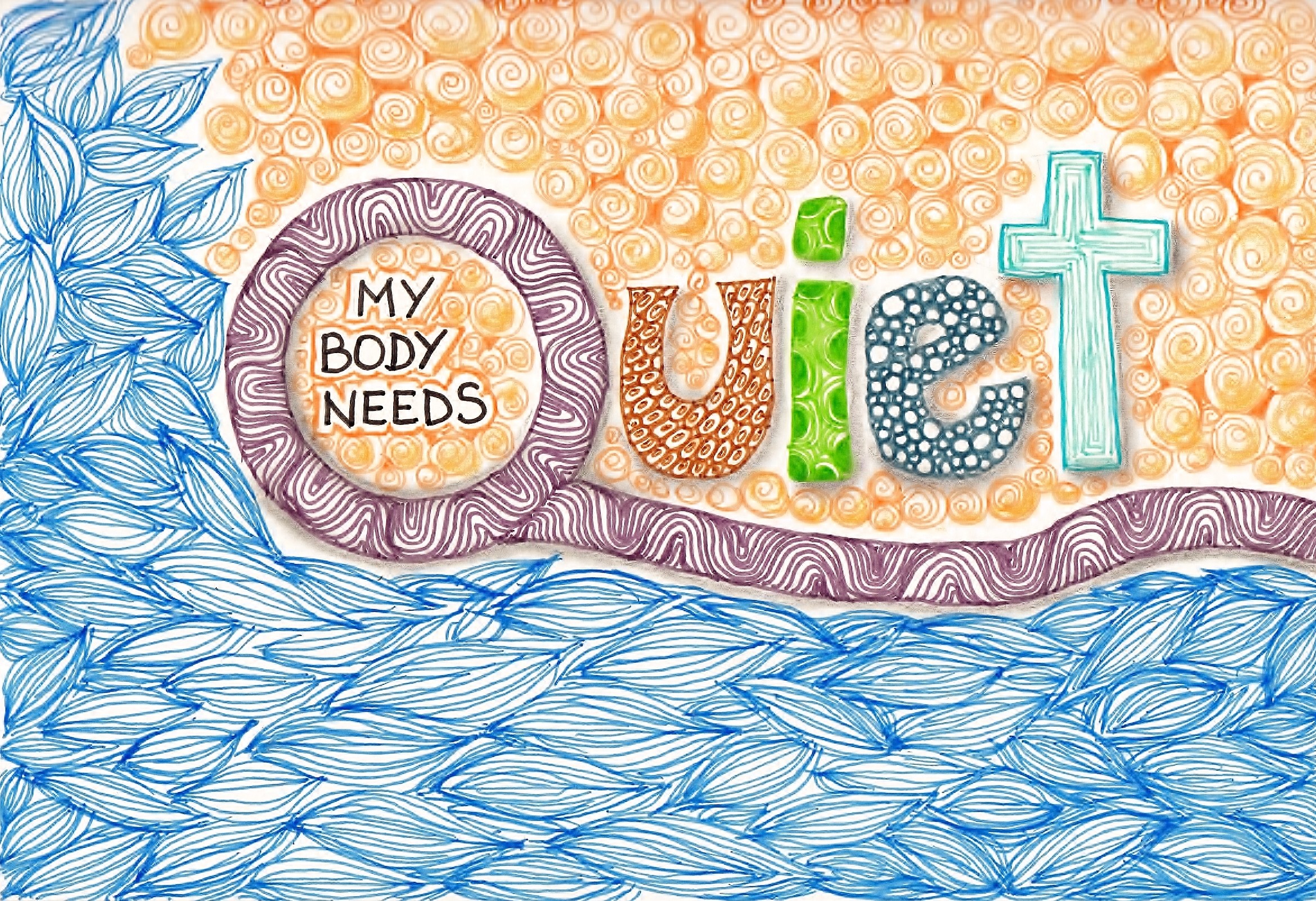
Gratitude and Creativity: My Body Needs Quiet

Everyone in my life now knows that when they ask me to do something that requires me to shower, get dressed, and then leave my home that the plans we make are tentative. They know this because of days like those that I’ve had for the past few days. On Saturday afternoon I was in so much pain I wanted to cry – of course, no tears would come. The reason I wanted to cry wasn’t solely the level of pain. It was also because there were things happening in my city this weekend and in the lives of some of my friends and family that I’d be able to participate in, if I were pain-free. Every time I have to say no to something because of my pain, it makes me feel sad.

As it is, now the only things I go to no matter how I feel are doctors’ appointments. Although, there are some exceptions when – like a few weeks ago for my dad’s retirement party and my friend J’s milestone birthday dinner – I force myself to go out despite my pain level. I went to both of those events feeling excruciating pain and knowing that I would be in even greater pain afterward. I also knew that it would take a few days to recover from that increased pain. Recover in the sense that my pain returns to levels where I can cope. In this instance, it took the better part of a week to get to “normal” after the party and birthday dinner, which took place within days of each other. The length of time it took to get to a pain level where I could cope was a reminder that I need to listen to my body and accept – and respect – what others may view as limitations, but I know are messages from my body I shouldn’t ignore.

My Body Needs Quiet

I’ve learned, over the past two years, that when I start a day with above normal levels of pain, that I have to listen to my body. What my body is telling me – screaming at me – on these days is that I need to be still; I need to rest; and I need to find quiet. It’s not always easy, but I’m getting better at listening to my body. That means this weekend because of the high level of pain I was feeling, I missed spending time with J, an arts festival, and my cousin’s baby shower that would have required me to exert a lot of energy – and probably pay for it with more pain. I missed those events and I had to do so without any regret.

Unfortunately, missing the physical activity involved in fun events isn’t the only thing that requires mindfulness of my body’s messages. In recent weeks, I’ve been trying to support my cousin who’s been having a tough time in her personal life. I’ve spent a lot of time on the phone with her just listening and being a sounding board, and I think it’s starting to take its toll on me. Because I want to show my support and let her know I’m there for her, I’ve been ignoring my need for quiet time.

Quiet time is something I’ve always factored into my self-care; and I think it’s important for everyone, but of even greater importance for anyone recovering from an illness or living with chronic pain. Reducing the busyness of the mind helps to reduce stress, which can slow recovery or cause pain levels to increase. I believe the continuous activity of phone calls and text messages – and my increasing worry for my cousin – are affecting my pain levels. As much as I know she’s depending on me for advice and comfort, I also know that my body needs time for quiet. I know this probably means not answering every call or responding to every text message from my cousin, but I have to re-establish the necessary balance of self-care for my body, and that includes quiet time.


Depeche Mode – Enjoy The Silence