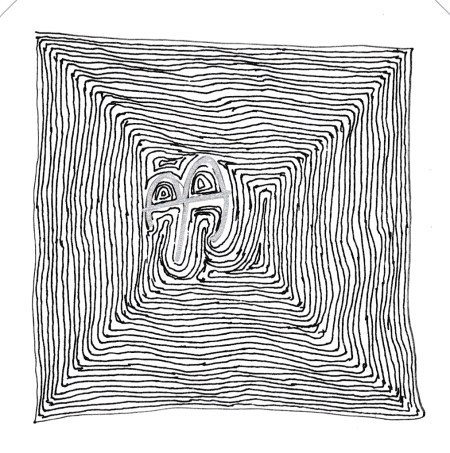
Gratitude and Creativity: Unsteady Vertigo Lines

So many things in my life have changed in recent years with the arrival of my pain. One of the big things is my limited transportation options. I don’t drive or travel by public transportation anywhere anymore. I don’t drive because I’m not comfortable gauging how foggy my pain medications will make my mind or how much they dull my reflexes and the time it takes to respond to sudden, unpredictable movements. I don’t take buses or the subway mainly because I have a tough time climbing stairs and I can’t stand for very long before my pain increases. Not to mention the painful, unexplained reaction my body has to what I assume are the vibrations from any vehicle I travel in for longer than ten minutes. I also have frequent bouts of lightheadedness, dizziness, and nausea, which does not bode well for traveling alone or operating a two-ton vehicle.

Sometimes my dizziness becomes full-blown vertigo, which is “the sudden sensation that you’re spinning or that the inside of your head is spinning.” It comes with no warnings. The best method of coping with it is sitting down, or lying down when just sitting upright makes everything spin. I had one episode that stretched over an entire week. It was impossible for me to do much beyond lying on my couch or sleeping. The constant feeling of the room spinning around nauseated me. At one point, I sat on my bathroom floor next to the toilet bowl for about an hour, so I could avoid falling over if the need to vomit did arise. Luckily, I haven’t had an episode as severe as that in the last couple of months.

Although there is no cure for vertigo, there are treatments to manage it. If it doesn’t go away on its own or if the frequency of the episodes increases, I may have to undergo a procedure called canalith repositioning, which involves “several simple and slow maneuvers for positioning your head” to move particles from your inner ear to another area where they are more easily absorbed. This procedure is taught by a doctor, audiologist, or physical therapist and “is usually effective after one or two treatments.” However, if canalith repositioning doesn’t work there is a surgical option that boasts a 90% success rate. I’ll keep my fingers crossed that things don’t get any worse and that the worst part of my vertigo remains the need to hug my toilet bowl periodically.

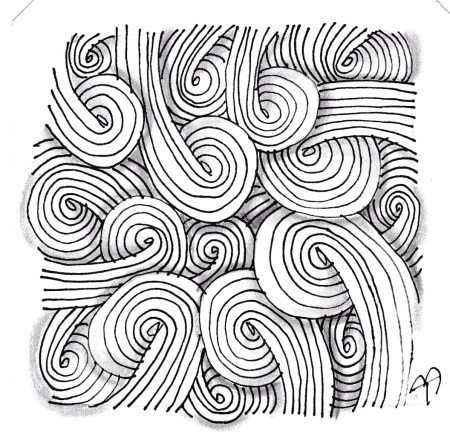
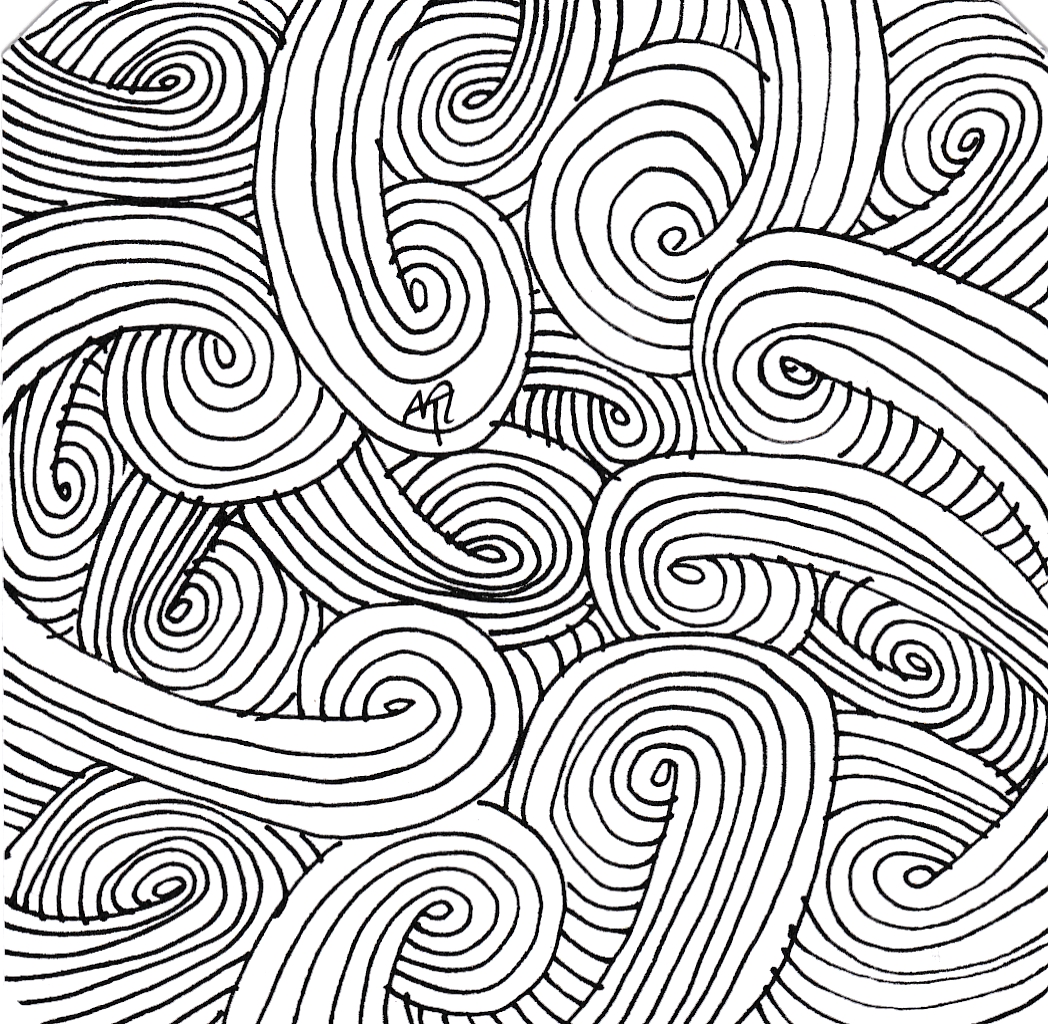
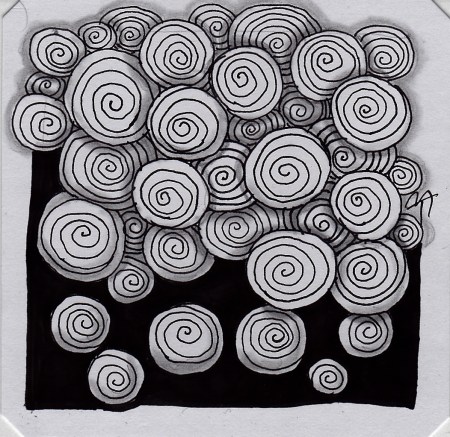
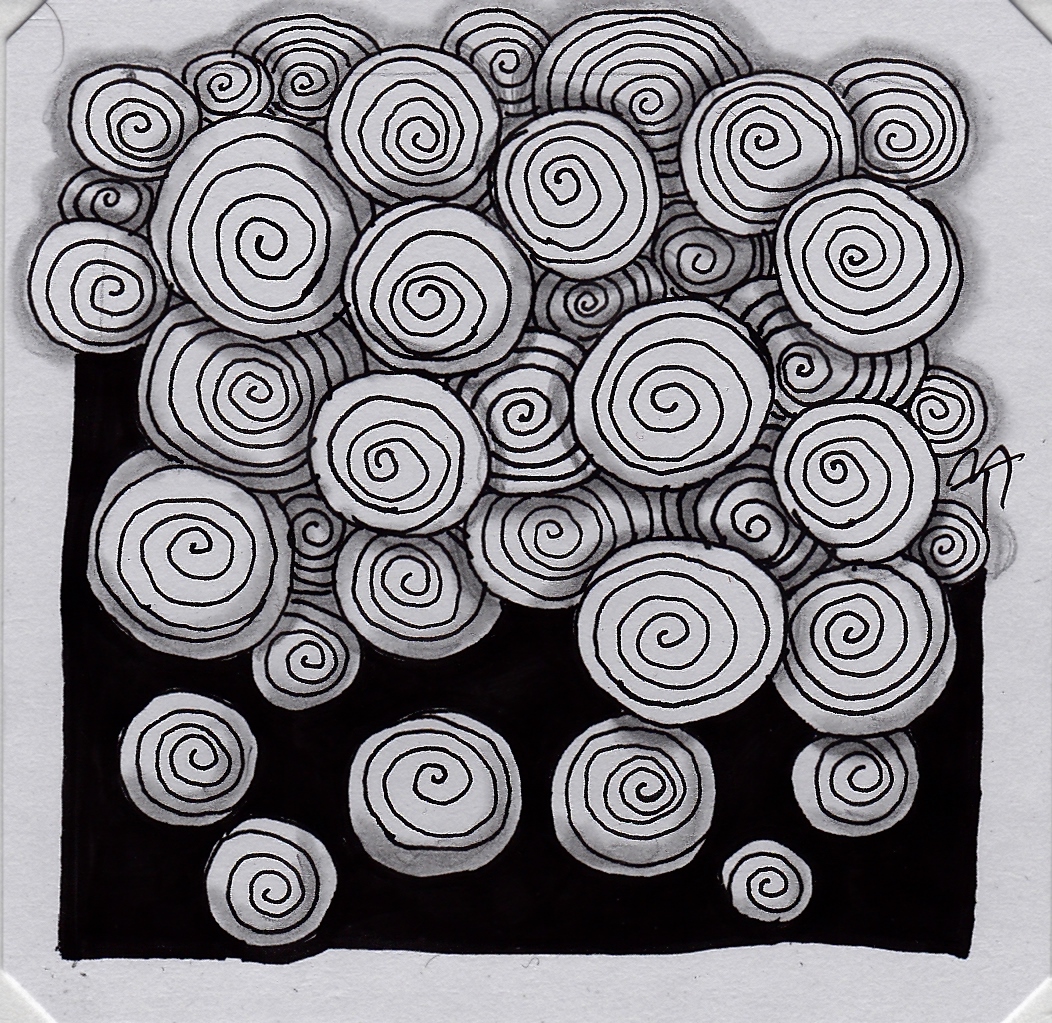
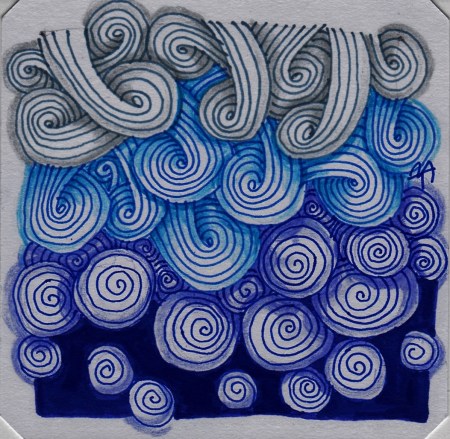
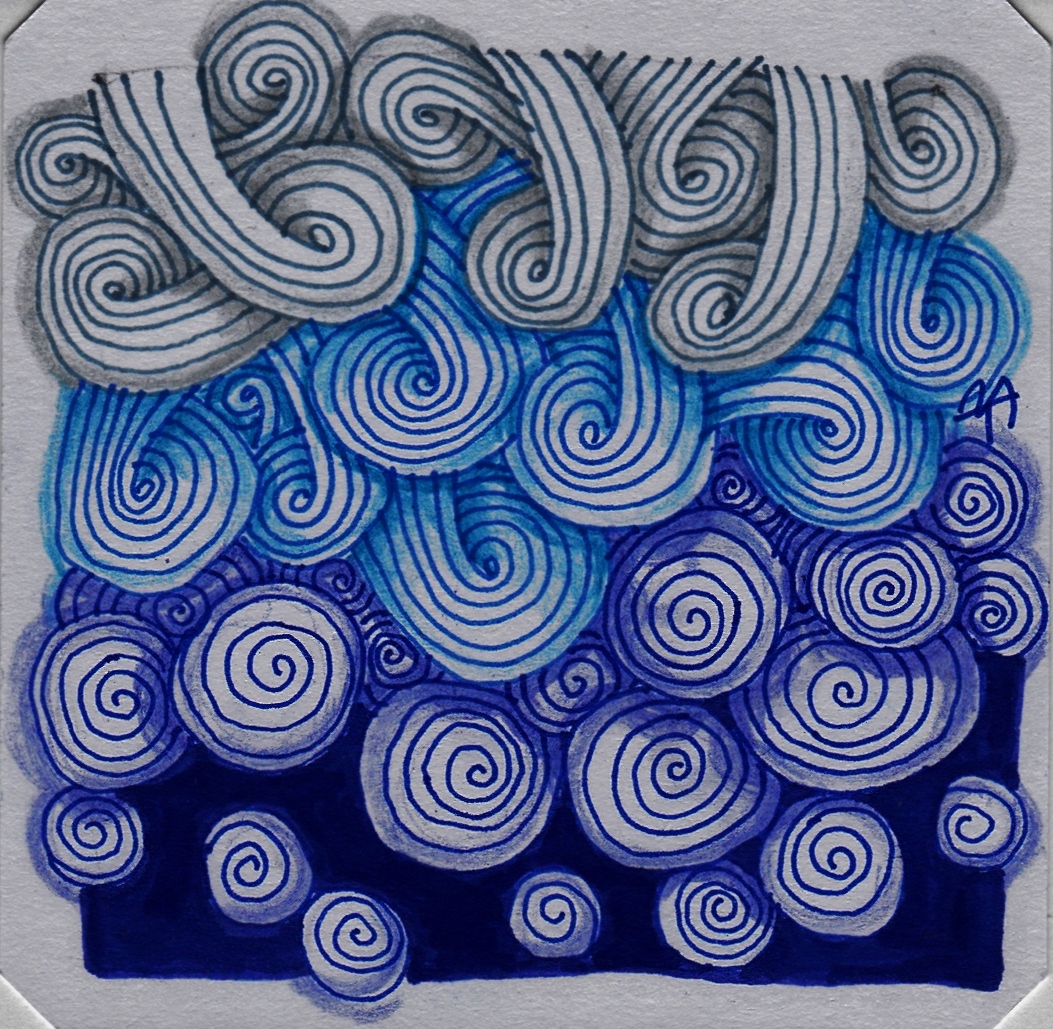
Even with this periodic dizziness, I’m still trying to focus on creativity. I think my body’s unsteadiness has given rise to my current obsession with patterns with curled and circular lines. I’ve given a lot of attention to a tangle pattern called ‘sand swirl’. I noticed while drawing it how my lines wobble, giving each swirl a shaky, non-uniform appearance when I want smooth, curved lines. I’ve drawn it repeatedly, by itself and with other patterns, even in coloured ink, trying to practice the wobbles out of it. But alas, no matter how deeply I concentrate, the wobbles aren’t going anywhere. In fact, they show up in other patterns I draw that have curled, circular or swirled lines. I can’t seem to will my hand to hold my pen to create the steady, smooth curves I want to draw.

Surprisingly, while trying to eliminate the unsteady, wobbly lines, I created some things I really enjoy looking at. I’m starting to think these unsteady, wobbly lines may be part of my artistic signature. Instead of trying to eliminate them, I’ll just embrace them and let my shaky hands lead me to create more swirling line art to become lost within.


Tiffany Lovering Tangle Tutorial – Sand Swirl
 

When Hoofbeats Mean Zebras

For some time I’ve been having a recurring dream – actually, it’s now a live waking vision – that I make an appointment to see the doctor who started me on my journey into chronic pain. She no longer works at the hospital where I was first treated for, and ignored when I described, my severe pelvic pain so I would need to do some detective work to track her down. Why would I want to exert any effort to see her you might be wondering? Well, when someone irreversibly changes your life for the worst you get an overwhelming desire to confront them to see the look on their face when you recount for them the hours, days, and months of endless pain you now live with because of their avoidable mistakes.

I believe I deserve an opportunity to tell her how disappointing it was – and continues to be for me – that a female physician was so dismissive of me when I described my pelvic pain symptoms. During my hospitalization, I tried, unsuccessfully, to share my medical history, and family health history, with her on the off chance there might be a relevant connection to something from my past or genetic ancestry. I want her to understand that just because a patient presents some symptoms for a particular illness that they could still very well have something else, and that the old saying of when you hear hoofbeats, think of horses not zebras isn’t always the right medical diagnostic rule to follow.

The results from the first abdominal scans I had were unusual and shocked the Emergency Room doctors, but a lack of expertise meant I had to receive treatment elsewhere. However, once they admitted me to the second hospital the attending doctors seemed to be on a mission to contain my illness to a textbook diagnosis that was more common, predictable, and manageable, which over time proved to be wrong. The diagnosis wasn’t right, yet this doctor continued to work from her flawed viewpoint, while my health deteriorated with each passing day. Oddly, even with my physical decline and increasing pain, she was certain I wouldn’t need to rest for longer than a week after my release from the hospital before returning to work. I want her to know how wrong she was about that too because it’s been almost three years and I’m not any closer to going back to work and no one can see if or when that might be possible for me.

I also I want her to know how wrong she was for under-prescribing pain medication for my pain management and telling me that if I had a pain flare up outside her hospital clinic hours to go the Emergency Room where I could receive additional support. The Emergency Room staff and doctors at that hospital were not supportive. At best, during each of my pain-filled late night visits they thought I was there seeking more opioid-based painkillers and did the bare minimum to treat my pain. Once they read my hospital clinic chart, they didn’t order any more tests or investigate alternative diagnoses; they simply hooked me up to an IV to boost the effects of the painkillers. They then wrote more prescriptions for the same dose of those ineffective pain medications; and told me to go back to the hospital clinic to see the same doctor who was failing to manage my pain because she didn’t believe what she had incorrectly diagnosed could cause so much pain. Poor pain management forced my nervous system into overdrive to respond to the onslaught of pain messages from my body. Now, even with the higher doses of pain medications I take, my nervous system can’t do enough to calm my body or ease the pain.

Because of all of this, in my recurring vision , I am angry. However, the doctor is unrepentant and she falls back on the cliché that medicine isn’t an exact science. I imagine standing in front of her, while trying to ignore my intense pain; bewildered that she refuses to accept any responsibility for the errors that brought such significant changes to my life. Thankfully, my anger is broken by a moment of clarity when I realize that there is nothing for me to gain from such a meeting. Nor do I believe that someone who carries herself through the world with an air of superiority would gain from it. As this vision fades, I see the next person in a line of this doctor’s past patients waiting to tell her similar things, but I know she won’t hear them either. I walk away thankful that I found doctors who are willing to listen to me and understand that sometimes when you hear hoofbeats they are zebras.


Joni Mitchell – Both Sides, Now

Zentangle: Tangle Patterns, Inspiration, and Deconstruction

This is not the original content I wrote to go with this post’s title. The first draft I wrote was a long rant in response to some very tense, unfriendly, and angry exchanges I keep encountering on some Zentangle-related websites and groups since I started using the meditative pattern drawing method. I decided not to post what I wrote because it doesn’t help anyone, least of all the people I see being dumped on, to write another angry post.

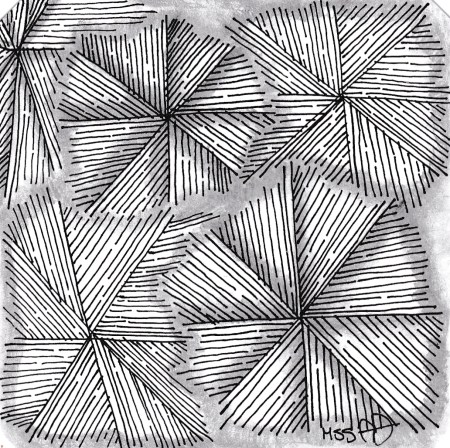
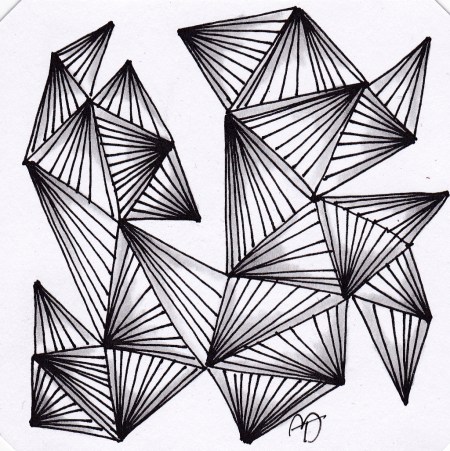
I started learning the Zentangle method because of the inherent meditative and mindful aspects of the process of drawing the various patterns. I’ve grown to enjoy getting lost in drawing lines and shapes. I spend a lot of time searching out more patterns online to expand my drawing skills and make the artwork I create in my art/gratitude journal more interesting. However, at times when I’m about to teach myself a new pattern I’ve found online, I notice negative exchanges written in some of the comments sections. It annoys me – actually, I get somewhat angry – because this thing, that is supposed to be enjoyable and relaxing, seems to be more about ownership and monetization than mindfulness.

I think some people forget that doodling has been around for a long time. Everyone does it. Although not everyone that doodles might take the time to name the patterns they draw. I know highlighting these points is going to make me unpopular to anyone who is devoted to the Zentangle method, but here’s the thing, slightly modifying something that already exists and giving it a new name doesn’t make it original or new. If that were the case, we would all be creative geniuses.

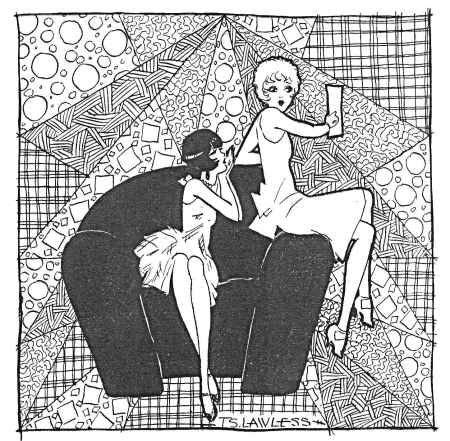
The Juggler - University of Notre Dame - May 1929

Cartoon from the commencement issue of The Juggler magazine of University of Notre Dame from May 1929


Furthermore, just because you’re inspired to deconstruct a complex pattern or image that was painstakingly created by an uncredited artisan in a woodwork carving, chiseled into a marble archway, painted on ceramic tiles, or stitched in fabric, that doesn’t make what you draw an original pattern. If you look around long enough you can usually find a pattern that existed for years, if not decades or centuries (in the case of ancient tribal and religious symbols) that looks like so-called “original” tangle patterns. At the end of the day, all art is derivative. Artists learn from imitating work produced by other artists, or trying to recreate things they see in the world around them, and they use it as a jumping off point to develop their personal style.


That being said, I have to stop letting myself get so bothered when I see some of the terrible things people write to each other in these spaces. As one Certified Zentangle Teacher (CZT) disappointingly stated in a comment I recently read online, for so many people Zentangle is “sadly just about making money”, which is bound to make some of those people more territorial and severe. For now, I will continue to use this drawing method as a creative meditative practice to divert focus away from my pain, but I think it wouldn’t hurt for some of the people getting bent out of shape about the use of patterns they “create” to remember that imitation is the purest form of flattery.


Arctic Monkeys – Brick By Brick