Gratitude and Creativity: My Body Needs Quiet

Everyone in my life now knows that when they ask me to do something that requires me to shower, get dressed, and then leave my home that the plans we make are tentative. They know this because of days like those that I’ve had for the past few days. On Saturday afternoon I was in so much pain I wanted to cry – of course, no tears would come. The reason I wanted to cry wasn’t solely the level of pain. It was also because there were things happening in my city this weekend and in the lives of some of my friends and family that I’d be able to participate in, if I were pain-free. Every time I have to say no to something because of my pain, it makes me feel sad.

As it is, now the only things I go to no matter how I feel are doctors’ appointments. Although, there are some exceptions when – like a few weeks ago for my dad’s retirement party and my friend J’s milestone birthday dinner – I force myself to go out despite my pain level. I went to both of those events feeling excruciating pain and knowing that I would be in even greater pain afterward. I also knew that it would take a few days to recover from that increased pain. Recover in the sense that my pain returns to levels where I can cope. In this instance, it took the better part of a week to get to “normal” after the party and birthday dinner, which took place within days of each other. The length of time it took to get to a pain level where I could cope was a reminder that I need to listen to my body and accept – and respect – what others may view as limitations, but I know are messages from my body I shouldn’t ignore.
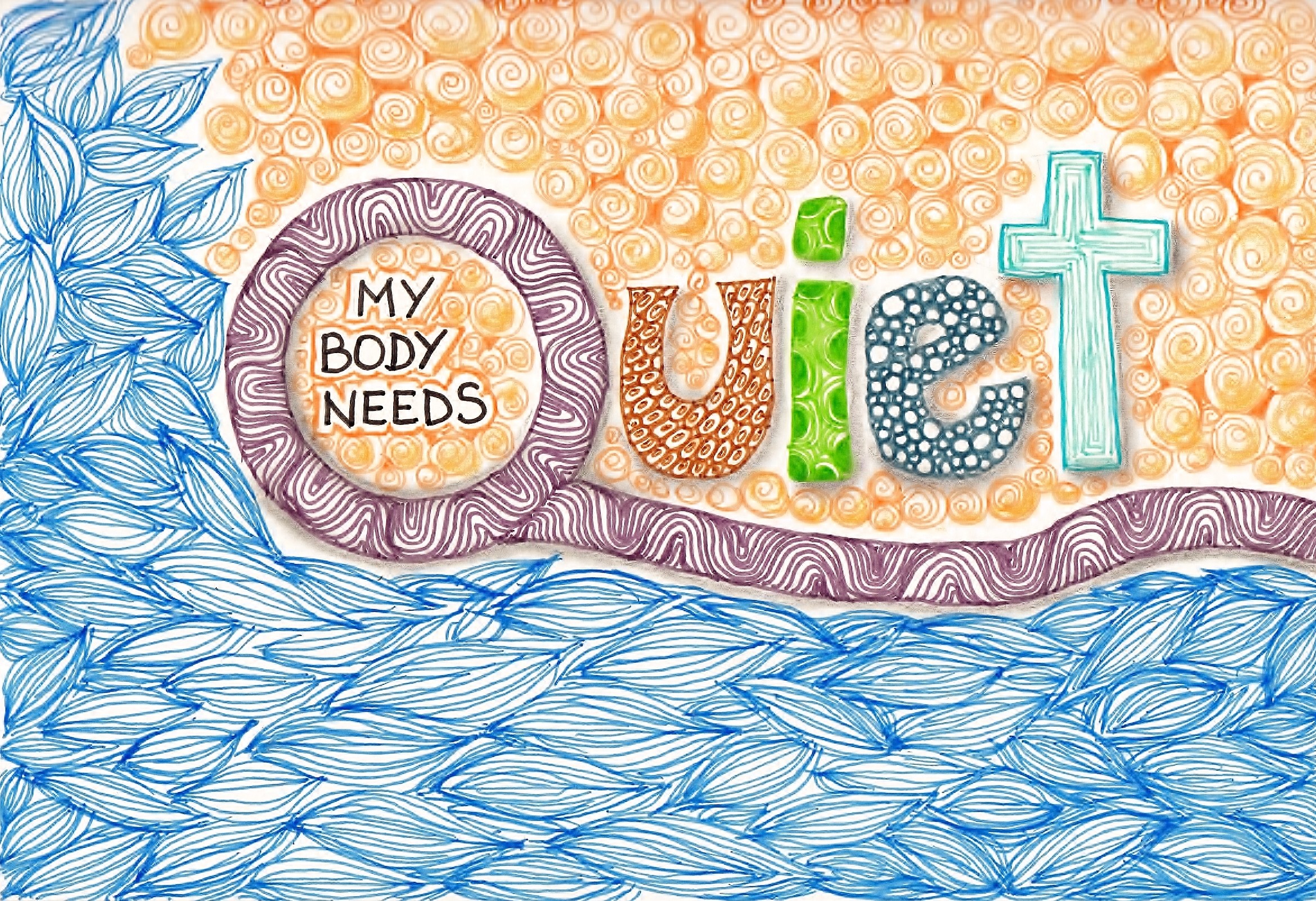
My Body Needs Quiet

I’ve learned, over the past two years, that when I start a day with above normal levels of pain, that I have to listen to my body. What my body is telling me – screaming at me – on these days is that I need to be still; I need to rest; and I need to find quiet. It’s not always easy, but I’m getting better at listening to my body. That means this weekend because of the high level of pain I was feeling, I missed spending time with J, an arts festival, and my cousin’s baby shower that would have required me to exert a lot of energy – and probably pay for it with more pain. I missed those events and I had to do so without any regret.

Unfortunately, missing the physical activity involved in fun events isn’t the only thing that requires mindfulness of my body’s messages. In recent weeks, I’ve been trying to support my cousin who’s been having a tough time in her personal life. I’ve spent a lot of time on the phone with her just listening and being a sounding board, and I think it’s starting to take its toll on me. Because I want to show my support and let her know I’m there for her, I’ve been ignoring my need for quiet time.

Quiet time is something I’ve always factored into my self-care; and I think it’s important for everyone, but of even greater importance for anyone recovering from an illness or living with chronic pain. Reducing the busyness of the mind helps to reduce stress, which can slow recovery or cause pain levels to increase. I believe the continuous activity of phone calls and text messages – and my increasing worry for my cousin – are affecting my pain levels. As much as I know she’s depending on me for advice and comfort, I also know that my body needs time for quiet. I know this probably means not answering every call or responding to every text message from my cousin, but I have to re-establish the necessary balance of self-care for my body, and that includes quiet time.


Depeche Mode – Enjoy The Silence

Constant Exhaustion and Missing Meds

Lately, I’ve been constantly exhausted. A part of it is my messed up sleep schedule. The other part of it is my pain medication level. However, this constant exhaustion is causing a problem: I’m missing some of my pain medication alarms or falling back asleep before I take a dose of my medications – as I did this afternoon.

Missing some of my scheduled medication times is causing my pain levels to fluctuate, and my goal to taper my pain medications to a lower dose is not going very smoothly. I know that I only had surgery a month ago and my body is still healing, but this constant exhaustion is making it hard for me to develop a normal routine and it’s frustrating me.

I’m wondering if anyone has any suggestions about how I can cope with this.


Successful Surgery With A Disappointing Recovery

It’s been four weeks since I had surgery. By all accounts, the surgery was a success. It was a success because they didn’t have to remove any of my bowels, especially my rectum. What they did remove was the mysterious growth that measured about 3cm x 3cm and was attached to my rectum but not growing out of it, and still has yet to be properly named. They also removed the organs the mysterious growth damaged, which were both of my fallopian tubes. In addition, there was a large cyst growing quite happily on my right ovary, which the surgeon removed without damaging my ovary. The surgeons sent everything they removed from my pelvis to pathology for testing. Since I haven’t received any calls requesting that I must urgently meet with any of my doctors, I’m assuming either they haven’t found anything too unusual or they still don’t know what the mysterious growth is.

When I’m finally healed from the surgery, I will have a vertical scar starting just below my belly button and extending down my pelvis measuring 10cm; or 3.9 inches for you non-metric converts. I’m grateful it’s that small because it would have been much larger if any of my bowels had to be removed, and I could have had an ileostomy attached to my abdomen. However, in place of those things, I will also have scars on my abdomen from the allergic reaction I had to the white, adhesive surgical bandage they placed over the steri-strips used to hold my incision wound stitches together. The allergic reaction I had caused my skin to develop large blisters around the edges of the bandage. I now have scars that show an outline of where the bandage was. I can only hope the scars will fade in time.

Apart from the allergic reaction to the surgical bandage, the big disappointment is that my pain is not gone. When I say that I’m not referring to the surgical pain, which is almost gone, I’m talking about the pain I’ve been living with for the past two years. The first signs that it was still with me came on the day they removed my epidural. Within a few hours of it being removed the old leg, hip, and back pain came back with a vengeance and my blood pressure jumped above 160. The nurses called the doctors from the Acute Pain Service to get my pain down to a level I could bear. That took a while and the whole time they were working on me all I felt was fear. Fear that what the doctors predicted prior to surgery was coming to fruition: I could have a major pain flare after surgery that could not be controlled and I might never be pain-free.

As I’m writing this my legs, right hip, and right lower back are hurting. I’ve been having this pain to varying degrees since they removed the epidural and patient controlled anesthetic (PCA) pump. To compensate for their removal and my body’s response to the surgical pain or body trauma as some doctors prefer to call it – at least I’m assuming these are the reasons – I am now taking pain medication at a dose that is just over three times higher than what I was taking before surgery. That scares me more than the pain. It scares me that before surgery, I was taking a significant dose of pain medications that didn’t always ease my pain and now this higher dose is barely doing the same.

My pain specialists are holding on to optimism. They believe that time will be my healer. They have me working on tapering the doses of my pain medications to a point where my pain is managed with the lowest doses possible. Until then I will try to live as normally as I can, which now includes accepting help from others without resisting, and monthly appointments to the pain clinic to monitor my progress.


OK Go – Here It Goes Again