Pain Clinic #9: Acupuncture Agony

I survived my first acupuncture treatment. I know that sounds dramatic, but I did have to sign a consent form and waive my right to sue the hospital and all staff if I had any negative reactions before my pain specialist started the treatment. Besides, once I outline what happened, that I characterize the outcome as survival might not sound far-fetched. After I signed the consent form, my pain specialist and the assisting nurse outlined all the possible known negative reactions I could experience during and after the treatment. The intention was to place ten acupuncture needles in my lower back close to my tailbone radiating outward to my hips, and more needles in other areas of my body. Because I can no longer lie comfortably on my stomach, we had to figure out the best position for me to lie down on the table to prevent me from moving during the treatment. The best position turned out to be lying on my left side with my right leg bent at the knee and supported by a pillow. I had another pillow placed under my head and both arms stretched in front of me – reading that back it sounds more complicated than it was. In anticipation of the bright lights of the treatment room, I brought a sleep mask with me that I put on to create a more relaxing mood.

With me lying steadily in place on the table, my pain specialist moved my clothes aside to get access to the bare skin of my lower back. She spoke to me as she started to insert the needles asking if they were causing too much pain as she placed them. Unfortunately, even though she didn’t insert them too deeply, the pain of each needle she put under the skin close to my tailbone was unbearable. After she inserted the fifth needle in the flesh close to my right hip, she decided not to put anymore into my back. I’m glad she stopped because I’m not sure I could have handled the pain of five more needles. My pain specialist placed the sixth and seventh needles on the backs of each of my hands in the soft pad between my thumbs and index fingers. The nurse set a timer for ten minutes, and then it was lights out.

During the first ten minutes, as I was lying on the table in the semi-darkness, I could feel an intense, tingling sensation radiating from each needle in my back and hands. It was uncomfortable and not at all like past soothing acupuncture treatments. When the timer went off the nurse came back to the treatment room to adjust, or as she said “twizzle” each needle. She set the timer for another ten minutes and left me alone in the dimmed room once more. The discomfort from the needles continued to grow. The familiar feeling I get at the beginning of a pain flare up started building in my legs, but there was still time left on the timer. While I waited for the time to run out, I hoped that the removal of the needles would ease the discomfort.

At the end of the twenty-minute treatment, my pain specialist returned to remove the needles. She delicately plucked each fine, silver sliver of metal from under my skin, and the nurse used cotton pads to dab blood away from some of the insertion points. My pain specialist told me to sit up slowly. As I sat up, a wave of nausea hit my stomach. I wanted to vomit. I sat still for a moment then tried to stand up. I felt dizzy. I had to sit back on the table. The nurse and my pain specialist were very concerned and made me lie back down for about 30 minutes. When I finally felt steady enough to stand up, the nurse said she could tell that I felt better because the colour had returned to my face. However, there was still concern that I might need more medical attention. She told me that if the nausea and dizziness continued or worsened that I should go to the emergency room.

As the day progressed, the nausea and dizziness started to fade slowly, but the pain flare up that followed was as unbelievable as it was unexpected. For the first week following that treatment, I had soreness in the areas where my doctor placed the needles; tingling in my hands and the soles of my feet; that tingling turned into fiery pain from the soles of both my feet all the way up to my pelvis and lower back, and I felt exhausted. I couldn’t sit comfortably and standing or moving around made the pain worse. I tried massaging the arches of my feet, my ankles and thighs but the added friction made the burning pain worse. Even my hands tingled, although I only had a single needle placed in each one. By the time I went back to the pain clinic for the second treatment a week later, I was so sore and stiff that my pain specialist decided against more acupuncture and had to increase the doses of my pain medications to help me cope with the pain. She also expressed surprise that I returned for another treatment and told me she hadn’t expected me to make it to the appointment because of the shape I was in after the first session, and how much pain I was still in while meeting with her. Even though I was still in so much pain, it never occurred to me to cancel the treatment.

It’s been a month since I had that acupuncture treatment and my pain is just getting back to a level where I can cope, even with the higher doses of pain medications. Because I had positive experiences with acupuncture in the past, this outcome came as a real shock to me. I knew that it was possible to feel some nausea and dizziness afterwards, but I wasn’t prepared for the intensity of what I experienced. Since going through this I found AcuTake, an online publication that provides information about acupuncture. According to an article on the site, “7 Acupuncture Side Effects That Are Normal”, one of the potential side effects is “worse symptoms” or what “is sometimes referred to as a healing crisis” because acupuncture “awakens your self-healing capabilities” and “can cause not only an exacerbation of current symptoms but also the recurrence of previous ailments that had been dormant.” The article further states, “The good news about this side effect is that it’s a sign that things are moving. In the case of acupuncture, this means that the primary objective is being met. That is, you are starting to transition on multiple levels from stuck to unstuck.”

I don’t know how true it is that I have to feel worse before I get better, but I have a follow-up appointment scheduled with my pain specialist in about two weeks and we’ll definitely have a conversation about whether the agony that comes with acupuncture will benefit me in the long run.


Stevie Wonder – Ordinary Pain
Gratitude and Creativity: Drawing Myself Out Of Heaviness

I’ve been writing about such heavy feelings and topics lately that I felt the need to lighten things up. It helps that the sun has lit up the otherwise overcast winter skies for a few minutes each afternoon this week and that I got some unexpected rest while meditating yesterday morning – I fell into a deep sleep for about an hour with my face planted in a pile of pillows. Not getting sleep tends to fry my brain and has a dampening effect on my moods. Even though I try to sound and act cheerful, the weight of fatigue drags me down like an iron anchor. I have to work hard not to succumb to the tug of depression, which only adds layers to my fatigue.

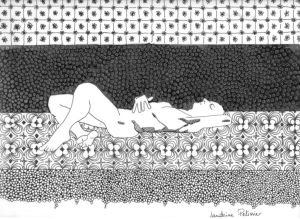
To counteract the heaviness I’ve been researching different art forms to figure out which one suits me best and what I might be able to achieve on a larger scale if I teach myself how to draw and paint. I’ve encountered some interesting artists. One artist whose gallery and website I really enjoyed exploring is Sandrine Pelissier. She’s a mixed media artist who creates beautiful paintings using acrylic paint, watercolor, dry pastels, graphite, oil sticks, and vibrant inks on paper, yupo paper, and canvas. She incorporates things like string, plaster, and paper to create interesting textures. She even incorporates life drawings and Zentangle patterns into her work. I’m considering taking one of her online classes to add some structure to my learning.

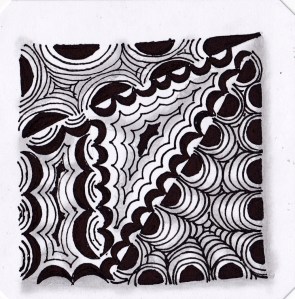
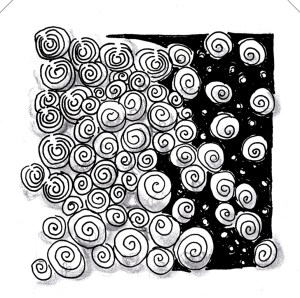
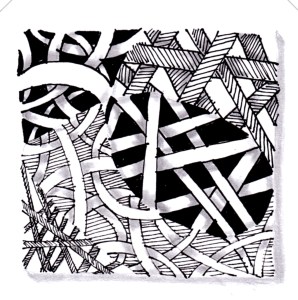
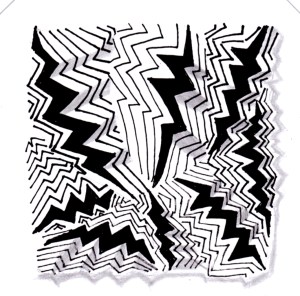
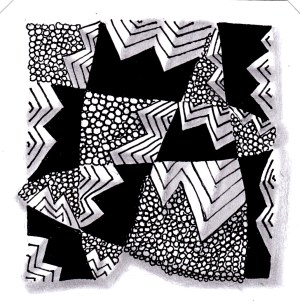
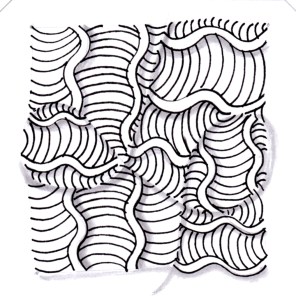
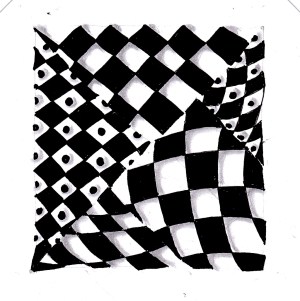
In the meantime, I started a small project. I’m making Zentangle tiles using a single tangle pattern (monotangle). It’s intended in part to make me practice drawing the patterns and steady my hands that tend to shake when I draw, while helping me to relax because I don’t meditate as much as I should. This is becoming a helpful practice because I realized that once I draw the patterns in my Zentangle notebook I may add the ones I like to something I draw in my art/gratitude journal, but the others never get drawn again. I also need to practice shading the patterns, which isn’t something I do in my notebook, and I’m not terribly good at right now. To make the project more challenging, instead of drawing random strings (guide lines) on each tile, I’m using the strings from the Tangle Patterns web site. There are currently 196 strings and tangles beyond that number in existence, so I should be busy for a while.


Don McLean – Vincent (Starry Starry Night)


Opioid Induced Constipation & The Undignified Big Pharma Response

Last Sunday, like millions of other people, I watched Superbowl 50. As usual, there were some great commercials throughout the game. However, I can’t forget one commercial from the 2nd quarter. Not because it was funny and creative like most of them were, but because of the targeted medical condition: opioid induced constipation (OIC). The reason I can’t forget it was how embarrassed I felt as my friend with whom I watched the game laughed at the inappropriate humour the pharmaceutical company used to promote its product. For those of you who don’t suffer from chronic pain or have never had the need to take opioid (narcotic) pain medications for pain relief, I assure you this condition is a real thing. The Australian Pain Society states, One of the most common adverse effects of chronic opioid therapy is constipation. Up to 95% of patients prescribed an opioid report constipation as a side effect, which can occur soon after taking the first dose.”

Opioid induced constipation is also known as opiate bowel dysfunction (OBD); and according to the American College of Gastroenterology “constipation may be debilitating among those who require chronic analgesia [pain relief]. OIC/OBD affected an average of 41% of patients taking an oral opioid for up to 8 weeks.”   The reason for this is that “opioids cause constipation by binding to specific receptors in the gastrointestinal tract and central nervous system, resulting in reduced bowel motility through direct and indirect (anticholinergic) mechanisms.”  In short, the opioid pain medications delay or block messages throughout the body that tell you when you need to empty your bowels.

I understand that a commercial’s purpose is to grab its audience’s attention in a short time. However, the tone of this commercial failed to convey the seriousness of this condition, while using lowbrow humour to flog the product. Practical Pain Management, a publication founded and written by pain experts, notes that although opioids have been in use for centuries; it’s only in recent decades that this kind of medication has received any significant attention and investigation. Sadly, we are only beginning to understand and identify the many side effects of opioids. Constipation, nausea, emesis, pruritus, respiratory depression, and somnolence are well known. However, not so well known are effects on immune function, urinary retention, endocrinopathies, gastroesophageal reflux (GERD), gastroparesis, sleep apnea, cardiovascular system, osteoporosis, emotions, dentition, and renal function.”

This lack of knowledge about opioids begs the question, how many people know that if a patient that has OIC/OBD does not receive the proper medical treatment it “may cause rectal pain and bleeding, abdominal pain and distension, urinary incontinence, faecal impaction, rectal tearing, and, in very severe cases, bowel obstruction and colonic perforation?”  How aware are people that OIC/OBD can reduce a person’s quality of life as much as the chronic pain doctors prescribe the opioid medications to treat? The Australian Pain Society also notes that, Some patients would rather endure chronic pain than suffer from the severe constipation that can arise with long-term opioid therapy. One study found that approximately one-third of patients missed, decreased or stopped using opioids in order to make it easier to have a bowel motion; the majority (86%) of these patients experienced increased pain as a result, which reduced their quality of life. Reducing the opioid dose is not considered useful, as analgesia [pain relief] may be compromised and constipation may not resolve.”

I know that 30 seconds isn’t a long time and not all the points I raise most likely could have been touched on in that amount of time. However, I do know that the pharmaceutical company could have approached this issue in a more dignified way. When the commercial ended – and my friend’s laughter died down –, I did educate him about the seriousness of OIC/OBD, and how I’m affected by this condition because of the large doses of opioid pain medications I have to take to manage my pain. I hope that others who might have been in the same situation during the game were able to have similar conversations. If not, here’s a link to a therapeutic brief from an Australian Pain Society study that gives information about OIC in plain language in a downloadable PDF file: Opioid-induced constipation– a preventable problem


Bob Dylan – Dignity